This module introduces the basic concepts of accelerometers, gyroscopes, and communication via the I²C protocol. Using an Arduino board and an MPU6050 accelerometer, participants will learn how to acquire, visualize, and interpret motion data.
The activity simulates the operation of biomedical systems used in the monitoring of involuntary movements, such as those used in the detection and tracking of tremors associated with neurological diseases, such as Parkinson's disease. To do this, an accelerometer is attached to the back of the hand to record micromovements and identify tremor patterns from the data obtained.
Duration: 90–120 minutes
Documents to download:
- Teaching guide.
- Rubric.
- Working document.
Materials and resources needed:
- Arduino boards.
- USB cables.
- Protoboard.
- MPU6050 accelerometers.
- DuPont jumper cables.
- External battery.
On our YouTube channel you will find a video tutorial that will help you step by step to connect and program the MPU6050 accelerometer with Arduino, visualize the movement data and identify tremor patterns from the signals obtained.
Related projects
Download
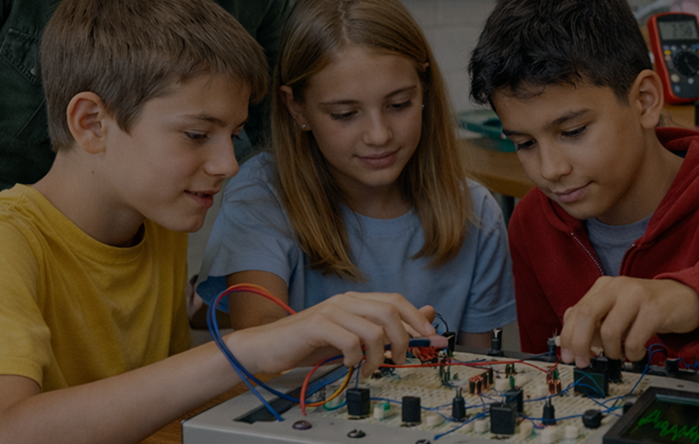
Electronics and Analog Computing
A practical introduction to analog computing in the lab, exploring a historic technology that is once again key to the future of artificial intelligence.
Download
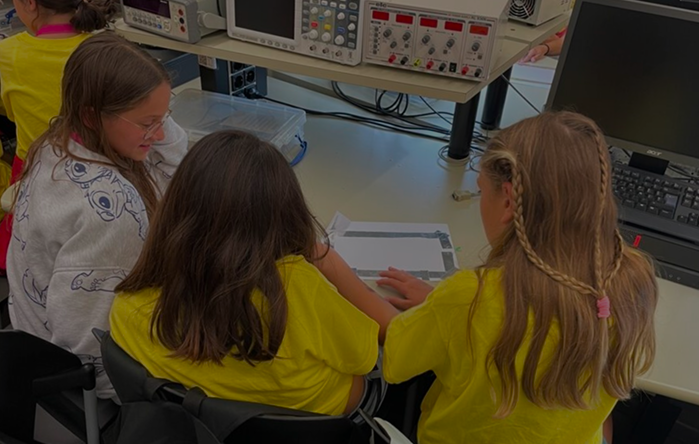
Electronics and digital computing
Practical and gamified workshop that introduces students to electronics and digital computing through an interactive space mission and real circuits.

Download
Analog computing
Practical activity to introduce analog computing by solving equations with simple electronic circuits.
Download
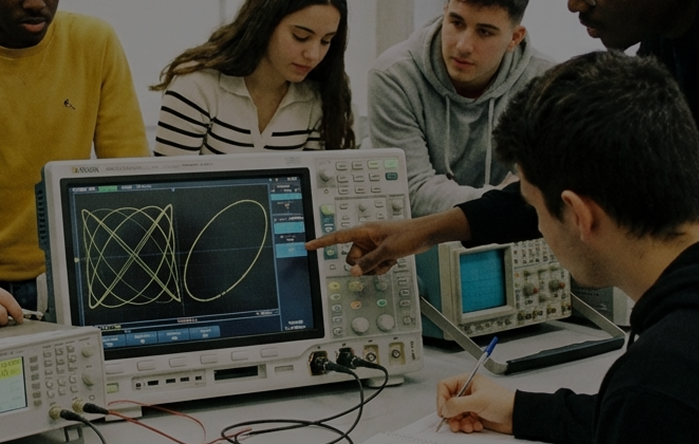
Lissajous curves
Visual activity to understand the interaction between two periodic signals using Lissajous curves.
Download
The digital sum
Interactive demonstrator of a real binary adder where students explore how computers perform calculations.

Download
Electronic outreach videos series ‘Elektrina’
A series of educational videos in which Elektrina introduces young people to the basic concepts of electronics - such as Moore's Law, chips, processors and semiconductors - and highlights the role of women in science and electronics.