Activity description
This module introduces, from both a theoretical and practical point of view, the analysis of the heart rate and the basic principles of optical monitoring of vital signs. Participants will build an optical sensor using an LED and a photodiode/photoresistor to detect light variations caused by blood flow and determine heart rate.
At an electronic level, the activity allows understanding the operation of pulse sensors and photoplethysmography (PPG) systems, as well as the relationship between the optical signal obtained and blood oxygen saturation. We will also work with simulation programs, such as Tinkercad, to design and validate the circuit before physically assembling it with Arduino.
Duration: 90–120 minutes
Documents to download:
- Rubric.
- Working document.
- Teaching guide.
Materials and resources needed:
- Arduino boards.
- USB cables.
- Protoboard.
- Electrical resistances.
- LEDs.
- LDRs (photoresistances).
- Ambient light sensor (eg TEMT6000).
- DuPont jumper cables.
- External battery.
Related projects
Download
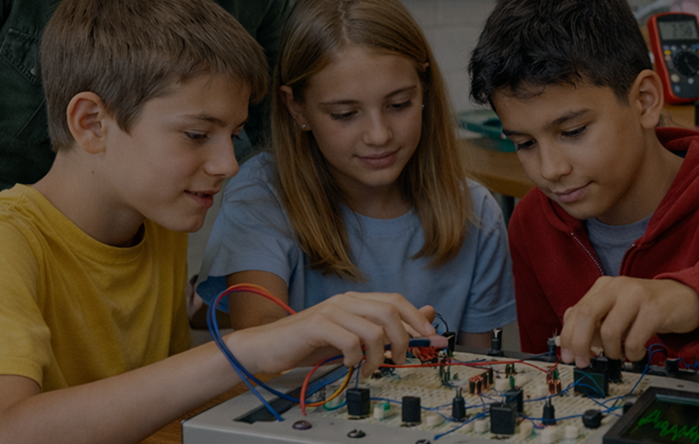
Electronics and Analog Computing
A practical introduction to analog computing in the lab, exploring a historic technology that is once again key to the future of artificial intelligence.
Download
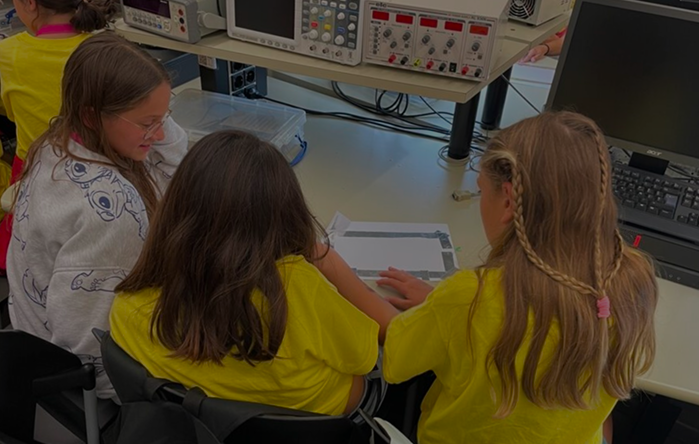
Electronics and digital computing
Practical and gamified workshop that introduces students to electronics and digital computing through an interactive space mission and real circuits.

Download
Analog computing
Practical activity to introduce analog computing by solving equations with simple electronic circuits.
Download
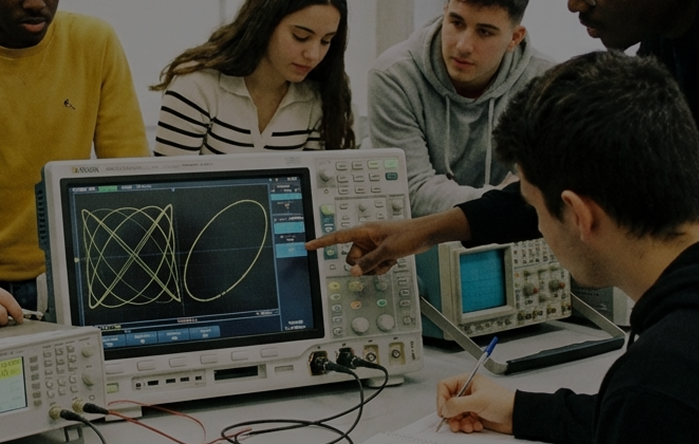
Lissajous curves
Visual activity to understand the interaction between two periodic signals using Lissajous curves.
Download
The digital sum
Interactive demonstrator of a real binary adder where students explore how computers perform calculations.

Download
Electronic outreach videos series ‘Elektrina’
A series of educational videos in which Elektrina introduces young people to the basic concepts of electronics - such as Moore's Law, chips, processors and semiconductors - and highlights the role of women in science and electronics.